
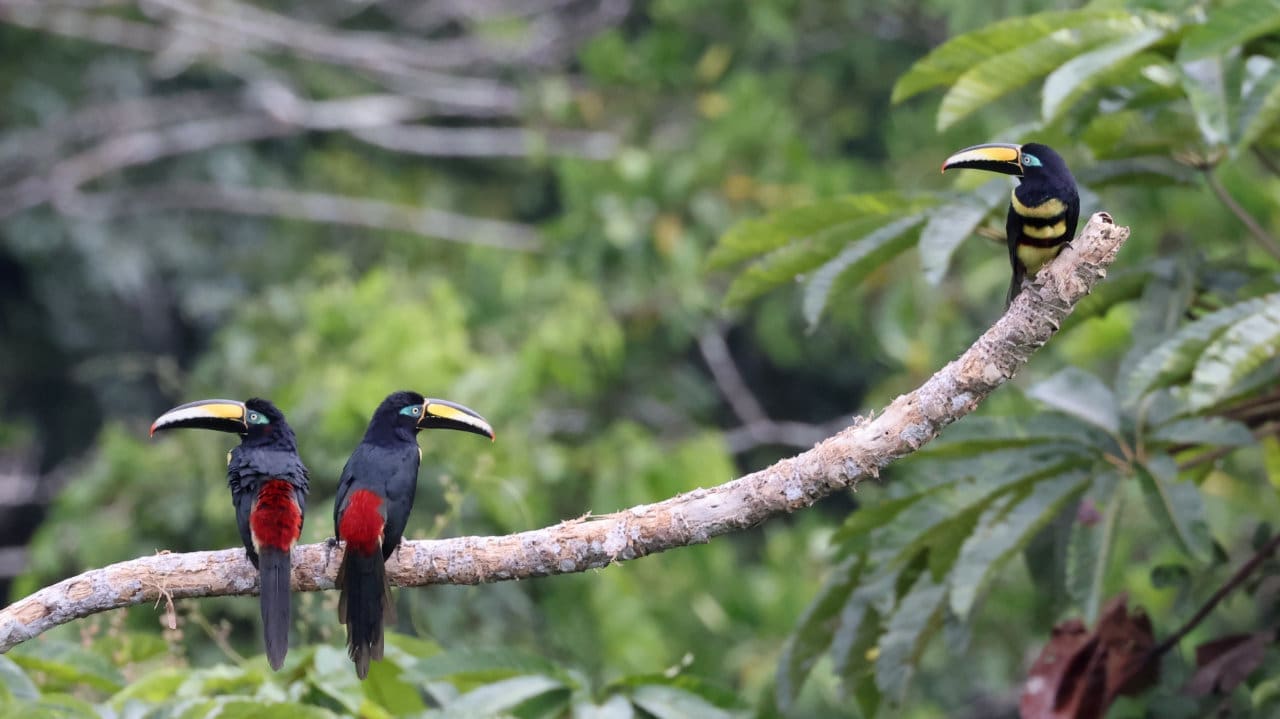
The Yasuni National Park, declared a UNESCO Biosphere Reserve in 1989, covers over 9,800 square kilometers (2 million acres) of pristine Amazon rainforest. It is a true biodiversity hot spot where amphibian, bird, mammal, and vascular plant diversity reach their maximum levels within the Western Hemisphere.
The best way to experience this amazing park is with the Napo Wildlife Center (NWC), one of the very best luxury eco-hotels in Amazonian Ecuador.
This Indigenous-operated ecotourism project includes the conservation of over 53,500 acres of pristine Amazon rain forest, the largest tract of tropical rain forest in Ecuador — part of the larger whole which includes 2.5 million acres for the National Park and approximately 2.5 million acres of the Waorani Community Reserve.
Located by the Anangucocha lake, the NWC lies in the ancestral territory of the Añangu Kichwa Community. Thanks to their own initiative and supported by the Ecuadorian EcoEcuador Foundation, the project began as a partnership. Since 2007, the Añangu Kichwa Community own and operate the NWC outright.
At the Napo Wildlife Center, you will experience a show of sounds and colors unlike any you have experienced before.
Please consider adding this trip as an extension to From Andean Peaks to Amazon Rainforests. Also, we are able to add pre- or post-tour options in and around Quito, America’s best-preserved Colonial City.
Day 1 – Arrive in Yasuni National Park
After a hearty breakfast in your hotel, we will head to the Quito International Airport and board a mid-morning, 35-minute flight to Francisco de Orellana Airport.
Weather permitting, we will have the possibility of seeing many volcanoes as we fly over the Eastern Andes, including Cayambe, located on the Equator. At this point, the land changes from high paramo to vast tropical rain forest extending out from the eastern foothills.
After landing, we take local transport to the boat port — a short trip of about 10 minutes — then board a comfortable covered motor boat for our 2-hour journey to the lodge. A delicious boxed lunch is served along the way, with birds like herons, kingfishers, oropendolas, and caciques visible en route.
After landing at NWC’s entry dock, we prepare for an awe-inspiring 1.5-hour dugout canoe ride through narrow creeks to the lake where the lodge is located. In this first outing, we have excellent chances to observe various species of monkeys and large birds like toucans, parrots, or macaws.
We will return in the late afternoon to the overwhelming view of the Añangu Lake in stunning light. The staff will welcome us with a refreshing drink and snack before you are shown to your private cabin. Before dinner, we will have an introductory presentation about the Amazon basin, the national park, and the lodge itself. After dinner, there is an optional night walk to observe nocturnal wildlife.
Day 2 – Parrot Clay Licks and More…
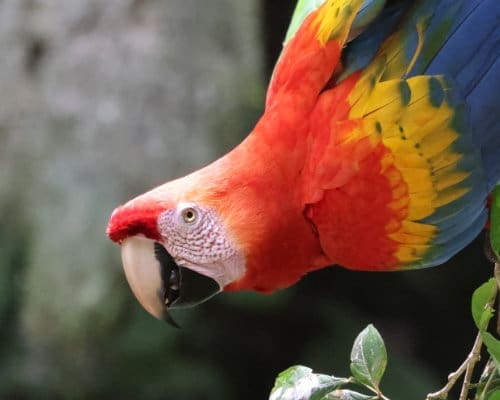
We start our day in rhythm with the Amazon tropical rain forest! An early wake up at 5 am, breakfast at 5:30 am, and departure by 6 am will help us reach the best parrot clay licks in Ecuador in time for peak activity at approximately 7:30–8:30 am. A total of 11 species of parrots, parakeets, and macaws visit the lick.
Following this extravaganza of birds, we head towards the forest clay lick, hiking a well-established trail through terra firme forest for about 20 minutes. This clay lick is active between 10 am and noon. Besides different parrot species, this forest clay lick can attract extraordinary mammals — we have been fortunate to observe White-lipped and Collared Peccaries, Red-howler Monkeys, Brazilian Tapir, Ocelot, and even Jaguar here!
We will eat lunch al fresco and spend the afternoon returning to the lodge, exploring along the way. After dinner, there is an optional night walk to observe nocturnal wildlife.
Day 3 – Forest Canopy Tower and More…
After early breakfast, we depart to climb one of the finest towers in the Napo region. At 120 ft (37 m) tall, the 12-story tower provides excellent views into different levels of rain forest, emerging at the top of a huge Ceiba–Kapok tree. Here, we have an ample platform with views formerly reserved only for birds and monkeys.
Flocks of colorful tanagers pass right through the canopy. Scarlet Macaws and their Blue-and-yellow cousins fly past; nearby Spider, Howler, Squirrel, and Capuchin Monkeys search for food. At least two species of large toucans call in the early mornings and afternoons.
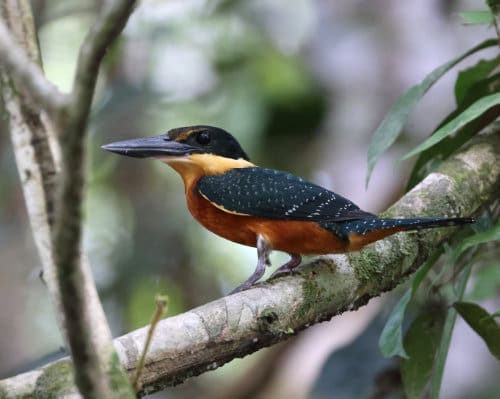
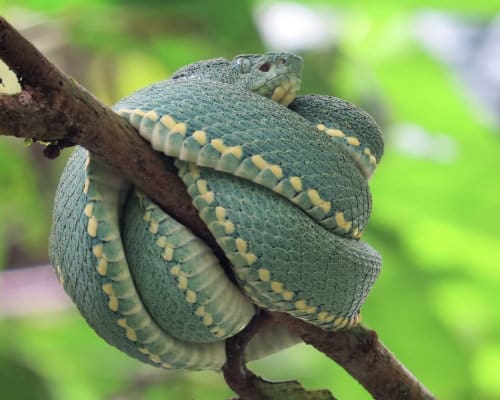
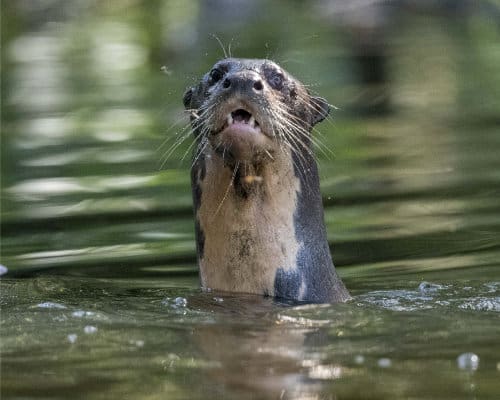
In the afternoon, we tour the lake and creeks by dugout canoe in hopes of encountering a Giant Otter family. All 5 species of Amazonian Kingfishers are present: Ringed, Green-and-rufous, Amazon, Green, and Pygmy. The lake also supports iconic species like the bizarre Hoatzin, Anaconda, and four species of caiman — including the Black caiman, measuring over 13 feet.
In the late afternoon, visit the observation tower above the dining room, enjoying wildlife and a refreshing drink before dinner.
Day 4 – Hiking in the Rainforest and Visiting the Añangu Kichwa Community
Terra firme is habitat that does not get inundated with rain at any time of the year — forest ridges with a universe of lush, well-established canopy in one of the most diverse areas of our planet.
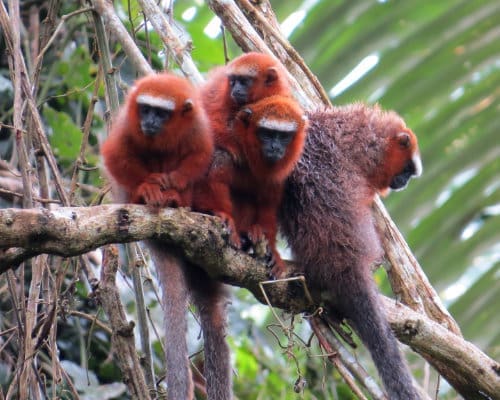
We will hike along mature forest to discover its interior, looking out for lizards, multicolored frogs, colorful manakins, and the unique endemic Golden-mantled Tamarin Monkeys, as well as troops of White-fronted Capuchin, Squirrel, and Spider monkeys crossing high in the canopy.
Our hike brings us to the Añangu Kichwa Community, home to the cofounders and leaders of the community — about 180 members today. Kury Muyo, an organization of women, will greet us with traditional dances and share their rich Amazonian Kichwa culture through the preparation of traditional foods and drinks, stories about their territory and traditions, and a presentation of their handicrafts including weavings of natural fibers, seeds, and nuts.
Our visit includes lunch at the community guest house, part of the Napo Cultural Center. In the afternoon we can visit the canopy tower near the community for more fantastic views before heading back to the lodge for a quiet evening and dinner.
Days 5 to 8 – Deeper Exploration of Yasuni National Park
If you decide to extend your stay to Day 8, we will enjoy a deeper dive into the surrounding forest, creeks, and streams. Options include:
- Visit a new clay lick or return to the clay lick we saw before.
- Attempt to see any bird species that have managed to escape our notice.
- Attend a handicraft workshop.
- Attend a cultural ceremony.
If Day 5 is your last day, we will leave early in the morning for our flight back to Quito, with a last chance to observe Giant Otters and Monk Saki Monkeys along the riverway.
We will arrive in Quito late in the day. We recommend not planning your return flight home on this same evening in case of travel delays from the Amazon. We can help you arrange a hotel near the airport for a restful night before your flight out the following day.
What To Expect At The Napo Wildlife Center
By traveling with us, you will be part of a private group tour. We will serve as tour leaders and bilingual naturalist guides with extensive knowledge of tropical forest biology, natural history, wildlife, and local cultures. Our group will also be led by a native Añangu guide who is an official Yasuni Park Ranger.
All Añangu guides are experts on the forest’s secrets and will share their ancestral knowledge of medicinal plants and other useful facts about their home. We work in partnership with our Añangu guide, creating informative and enjoyable excursions each day.
It is important to remain flexible in order to take advantage of the highest peaks of activity and weather conditions in the forest. We will schedule our outings as a group before dawn or at sunrise to maximize wildlife observation. We may offer alternative excursions in the late afternoons and evenings to enhance your Amazon experience to the fullest.
Keep in mind that the shorter tour may not be able to accommodate seeing everything at the NWC.
This Itinerary Includes
- Transfers in and out, from and to airport and lodges.
- Private land transportation according to itinerary.
- Meals and snacks.
- Beverages including purified water, soft drinks, fruit juices, coffee & tea.
- Accommodation based on double occupancy.
- Tour Leader — Bilingual Naturalist Guide equipped with quality spotting scope and years of experience.
- Local Indigenous guides at most lodges.
- All excursions described in program.
- Admission fees to parks and reserves described in program.
Not Included
- International airfares.
- Personal expenses like laundry or alcoholic drinks.
- Tips for guides, drivers, and staff.
- Travel or Medical insurance.
- Any other item not specified in what is included.
Wildlife Spotlights
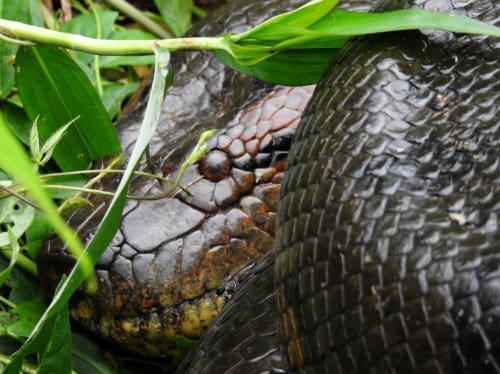
Green Anaconda
When taking into account both weight and length, the green anaconda is the largest snake in the world. It grows up to 9 meters and weighs as much as 227 kilograms — longer than six ten-year-olds lying head to foot and heavier than all of them put together!
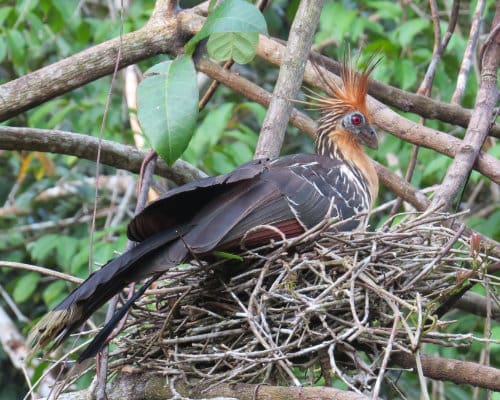
Hoatzin
The odd appearance of the Hoatzin has baffled taxonomists for more than a century. Recently, studies show that this bird is the last representative of an avian lineage that dates back to the time of the dinosaurs!
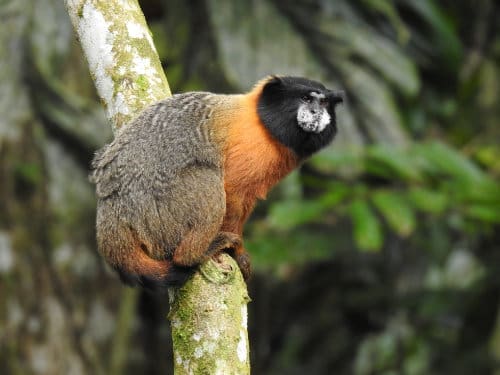
Golden-Mantled Tamarin
The Golden-mantle Tamarin is one of the 11 species of primates present in Yasuni National Park. They eat mainly fruit, nectar, and insects but also consume sap from holes created by the Pygmy marmoset.
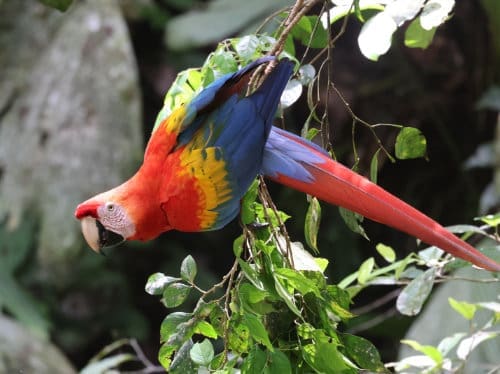
Scarlet Macaw
The Scarlet Macaw boasts a large, powerful beak that easily cracks nuts and seeds, while its dry, scaly tongue has a bone inside it that makes it an effective tool for tapping into fruits. Macaws also have gripping toes that they use to latch onto branches and examine items.
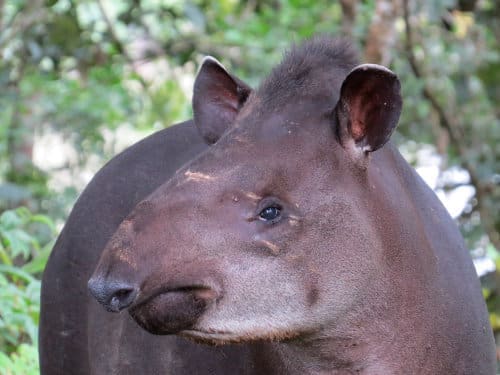
South American Tapir
Tapirs have a short prehensile (gripping) trunk — really an extended nose and upper lip — which they use to grab branches and clean them of leaves or to help pluck tasty fruit.
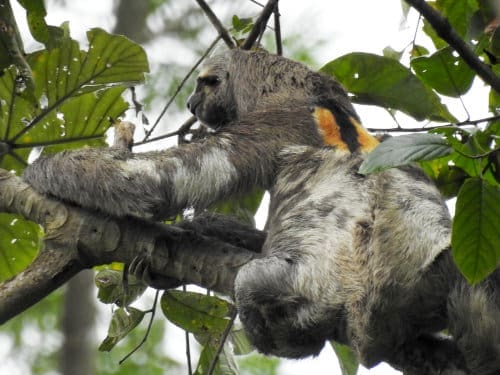
Three-toed Sloth
The sloth is the world’s slowest mammal, so sedentary that algae grows on its furry coat, giving it a greenish tint that is useful camouflage in the trees of its Central and South American rain forest home.
Important Information for All of Our Tours
Cancellation Policy
Cancellation refunds and penalties are based on the following schedule:
- If cancellation is made 120 days or more before the tour departure date, a cancellation fee of $500 per person will be charged.
- If the client chooses to reserve another Biotropica Expeditions tour that will operate within the upcoming 12 months, the cancellation fee will be $100 per person.
- If cancellation is made fewer than 120 days before departure date, no refund is available.
This policy and fee schedule also apply to all trips or extensions. We strongly recommend the purchase of trip cancellation insurance for your protection.
Visas and Passports
VISAS: Visas are not required for U.S., Canadian or European citizens for entry into Ecuador for a stay of up to 90 consecutive days.
PASSPORTS: You will need a current passport with a minimum of 6 months remaining from its expiration date and a minimum of two blank pages for stamps. If you need a new or renewed passport, please do so well in advance. We recommend arriving in Ecuador with a color photocopy of the first two pages of your passport kept in a safe place.
The best source for current information for U.S. citizens entering Ecuador can be found on the US State Department website.
Health and Safety
The US Centers for Disease Control provides general suggestions for health and vaccinations for your trip to Ecuador. We highly recommend following their suggestions.
The US State Department maintains an updated travel advisory for Ecuador. We highly recommend US clients signing up for the STEP program to receive updates from the US Embassy in Quito while traveling.
Additional Expenses
Your trip with Biotropica Expeditions includes most expenses. However, you will want to bring enough cash to cover personal expenses not included in the program such as taxi rides, laundry, special gratuities, meals on your own, and gifts to bring home.
It is difficult to predict fuel costs at the time of departure. If fuel rates increase significantly, it may be necessary to institute a fuel surcharge. We will provide as much guidance and warning as possible.
Money in Ecuador
The official currency of Ecuador is the US dollar. Cash is most commonly used in rural areas and family-run businesses. We recommend bringing bills in small denominations as anything larger than a $20 can be difficult to spend.
ATMs are available in major cities but can be difficult to find in smaller towns and rural areas. Most credit cards, especially MasterCard and VISA, are accepted in large cities like Quito, Cuenca, and Guayaquil.
Pre- and Post-Tour Options
Some participants may want to explore Quito — the largest and best-preserved colonial center in Latin America and the world’s very first UNESCO World Heritage city. Arriving a day or two early allows time for impressive historical sites, ancient baroque art, and museums cradled in the foothills of Pichincha volcano.
Activities include visiting the Alabado museum’s exquisite pre-Columbian ceramics, exploring striking monasteries and cathedrals, and seeing the emblematic Plaza de la Independencia. Above Quito, the Pichincha volcano offers access to the Choco Cloud Forest Biosphere Reserve with extraordinary hiking and birding. Other options include the Botanical Garden of Quito or excursions to Antisana or Cotopaxi National Parks.
Would you like to personalize this tour?
Would you like to add a day, visit a different site, or make sure you see a certain bird? Please fill out our reservation request form, or contact Norby and Susy directly via WhatsApp at +593 99 901 1505.